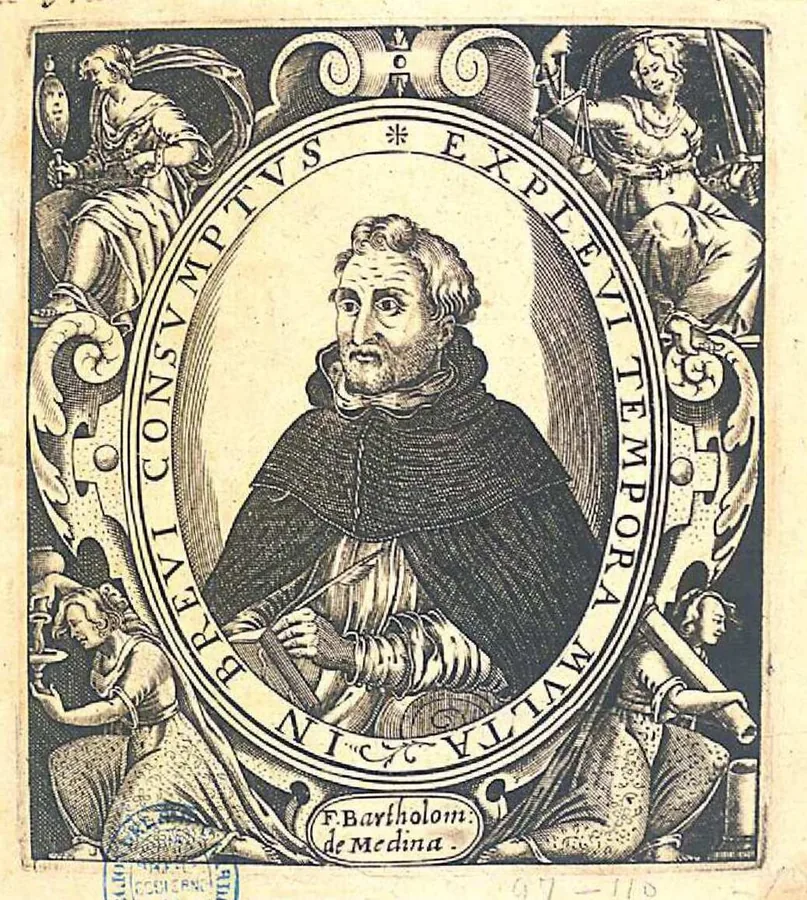
Bartolomé de Medina (1527 or 1528–1580) was a Spanish Dominican, born in Medina de Rioseco. He studied at Salamanca in the generation taught by Vitoria's students and spent his career there, holding the prime chair of theology from 1576 until his death.
His commentaries on the Summa, on the Prima Secundae (1577) and on the Tertia Pars (1578), are among the fullest of the Salamanca school. In discussing conscience in the Prima Secundae he gave the first explicit statement of what came to be called probabilism: that one may follow a probable opinion even when the opposite is more probable. The thesis shaped Catholic moral theology for two centuries and provoked long controversy, including within his own order.